Stop scrolling through Pinterest boards trying to decode whether that stunning living room is modern or contemporary. The confusion is real, and you’re not alone. These two design styles get tangled together so often that even seasoned decorators sometimes blur the lines.
Here’s what matters in 2026: modern design refers to a specific historical period (roughly 1920s to 1950s) with strict principles rooted in mid-century aesthetics, while contemporary design is what’s happening right now. It’s fluid, evolving, and pulls inspiration from multiple sources including yes, modern design itself. Think of modern as a vintage photograph and contemporary as your live camera feed.
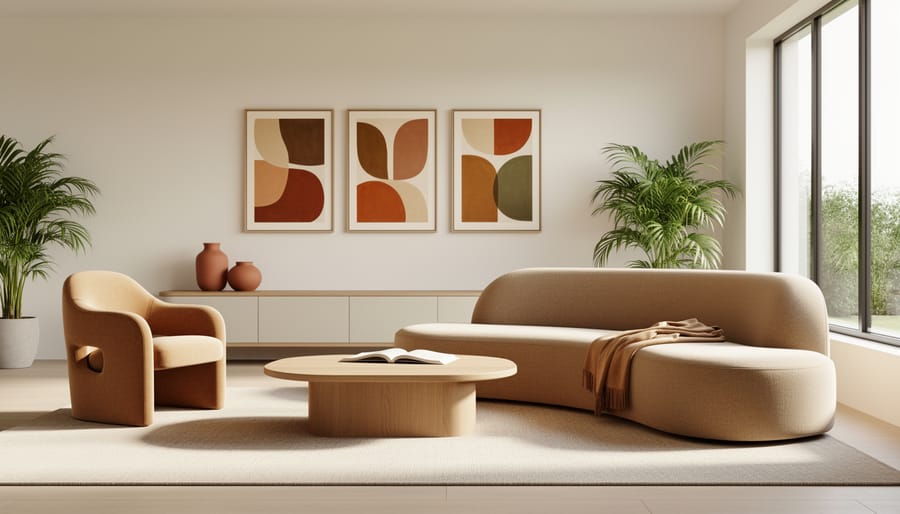
The distinction shapes everything from your furniture choices to your color palette. Modern spaces celebrate clean lines, warm woods like teak and walnut, and that iconic less-is-more philosophy born from the Bauhaus movement. Contemporary rooms embrace what’s relevant today: curved furniture silhouettes making a major comeback, mixed metal finishes, biophilic design elements, and technology integration that feels invisible rather than intrusive.
Why does this matter for your home? Because understanding these styles prevents expensive decorating mistakes. You won’t buy a sleek Eames-style chair (modern) and wonder why it feels off in your contemporary space filled with organic shapes and textured fabrics. You’ll know why your minimalist modern bedroom needs those specific architectural elements, or how to layer your contemporary living room without it looking cluttered.
This article breaks down both styles with visual clarity, room-by-room applications you can implement this week, and current examples from 2026’s design landscape. Whether you’re refreshing a single room or planning a whole-home transformation, you’ll finish with a clear vision and actionable steps that work for real living spaces.
The Real Difference Between Modern and Contemporary
The terms modern and contemporary get tossed around interchangeably in design conversations, but they describe genuinely different approaches to decorating your home. Understanding the distinction will save you from buying furniture that doesn’t match your vision and help you communicate clearly with designers, contractors, or even when searching for inspiration online.
Modern design is rooted in history. It refers specifically to the design movement that flourished from the 1920s through the 1950s, championed by icons like Le Corbusier, Charles and Ray Eames, and Mies van der Rohe. When you see a mid-century modern chair or a Bauhaus-inspired coffee table, that’s modern design. Its principles remain fixed: clean lines, minimal ornamentation, function over form, and a specific aesthetic vocabulary that doesn’t change because it’s historical.
Contemporary design, by contrast, lives in the present tense. It describes what’s happening right now in the design world. In 2026, contemporary home decor absorbs influences from sustainability movements, biophilic design principles, advances in smart home technology, and a renewed appreciation for handcrafted elements. Twenty years ago, contemporary looked different. Twenty years from now, it will evolve again. The style is fluid, responsive to cultural shifts, technological developments, and changing lifestyle needs.
| Aspect | Modern | Contemporary |
|---|---|---|
| Time Period | 1920s-1950s (fixed historical era) | Right now, constantly evolving (2026) |
| Color Palettes | Neutrals with primary color accents, stark contrasts | Warm neutrals, earthy tones, nature-inspired hues |
| Materials | Steel, glass, molded plywood, chrome | Sustainable woods, natural stone, organic textiles, mixed metals |
| Furniture Lines | Strict geometric shapes, sharp angles | Softer curves, organic forms, sculptural silhouettes |
| Defining Character | Minimalist, function-driven, design as ideology | Comfortable minimalism, adaptable, human-centered |
Here’s where it gets interesting: contemporary design in 2026 doesn’t reject modern principles. It builds on that foundation of clean lines and functional spaces but softens the edges, literally and figuratively. Where modern interiors often felt austere and museum-like, contemporary spaces prioritize livability. The rise of remote work, wellness culture, and environmental awareness has pushed contemporary decor toward warmer materials, biophilic elements like indoor plants and natural light, and technology that integrates invisibly rather than dominates the space.
This evolution reflects broader market trends. The home decor sector keeps expanding because people want spaces that work for how they actually live now, not how designers imagined living seventy years ago. Contemporary style gives you permission to mix that iconic Eames lounge chair with a chunky handwoven throw, to pair sleek cabinetry with open shelving displaying ceramic pieces, and to create rooms that feel curated rather than decorated from a catalog.
What Contemporary Home Decor Looks Like in 2026
Color Palettes Defining Contemporary Spaces Now
The color shift in contemporary interiors marks perhaps the clearest break from classic modern design. Where mid-century modern spaces embraced cool grays, stark whites, and bold primary accents, 2026’s contemporary palette wraps you in warmth the moment you enter a room.
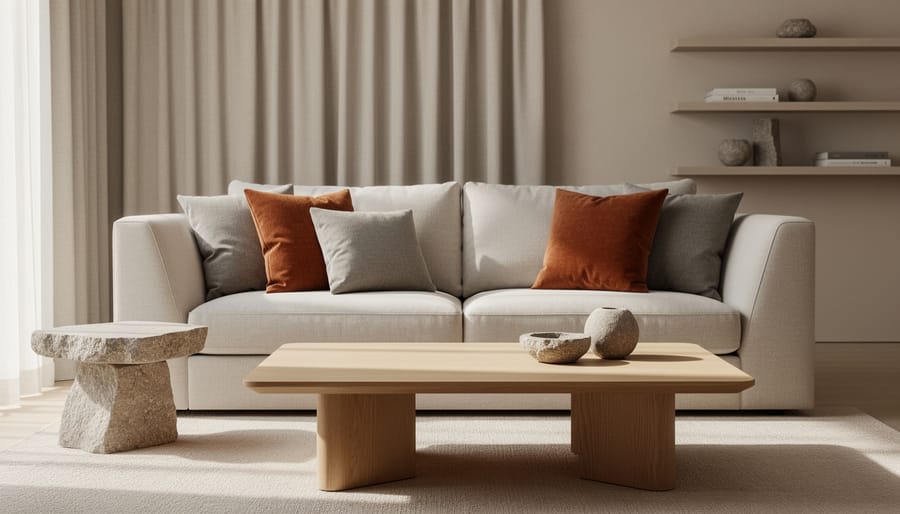
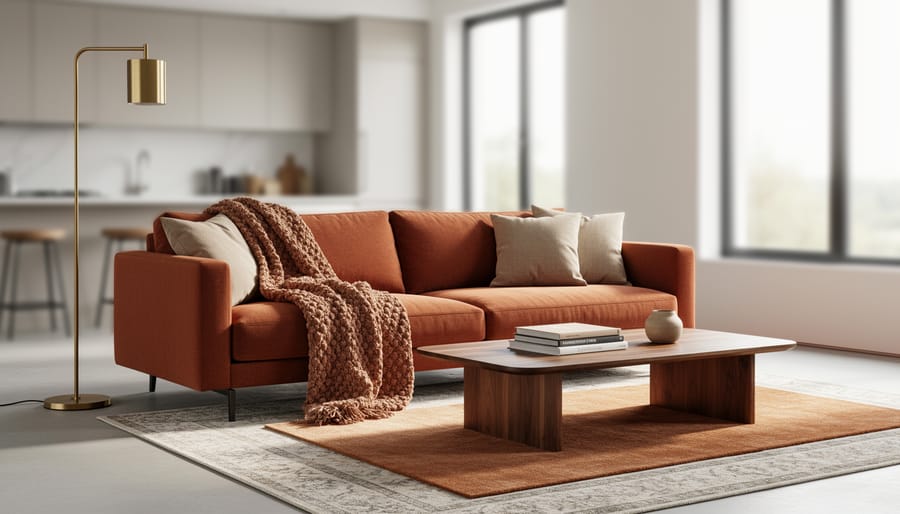
Earthy neutrals anchor today’s spaces, think greige (that perfect gray-beige hybrid), warm taupes, and creamy off-whites with underlying yellow or pink tones rather than blue. These aren’t boring beiges; they’re sophisticated bases that change throughout the day as natural light shifts across textured surfaces. Pair them with warm terracotta, which has evolved beyond its 2024 peak into more nuanced burnt orange and clay tones that ground a space without overwhelming it. Use terracotta as an accent wall in a bedroom, through ceramic vessels on open shelving, or in a statement upholstered chair.
Deep greens, sage, olive, forest, and even near-black hunter green, bring the outside in, supporting the biophilic direction of contemporary design. These shades create calm, particularly in living areas and bedrooms, while still feeling current rather than retro-70s.
The psychology matters: warm neutrals and earth tones reduce stress and create approachability, while greens connect us to nature and promote focus. Contemporary spaces layer these colors through paint, textiles, and natural materials rather than relying on a single statement wall, creating depth that feels collected rather than decorated all at once.
Materials and Textures Taking Center Stage
Contemporary decor in 2026 revolves around materials you can see and feel. Walk into any thoughtfully designed space right now and you’ll notice sustainable woods with visible grain patterns, white oak, walnut, teak, often left in their natural finish or treated with light stains that enhance rather than hide character. These woods appear on everything from dining tables to accent walls, bringing warmth that balances contemporary’s clean lines.
Natural stone has returned with purpose. Think honed marble with soft veining in bathrooms, travertine coffee tables that show their mineral history, or slate accent pieces that ground a room. The finish matters: polished stone reads modern, while textured or honed surfaces feel distinctly contemporary.
Textured fabrics create the depth that prevents contemporary spaces from feeling cold. Bouclé upholstery on curved chairs, linen drapery that catches light, chunky knit throws, and handwoven rugs all add tactile interest. Contemporary decorators layer three to five different textures in a single room, smooth leather against nubby wool, glossy ceramics near rough stone.
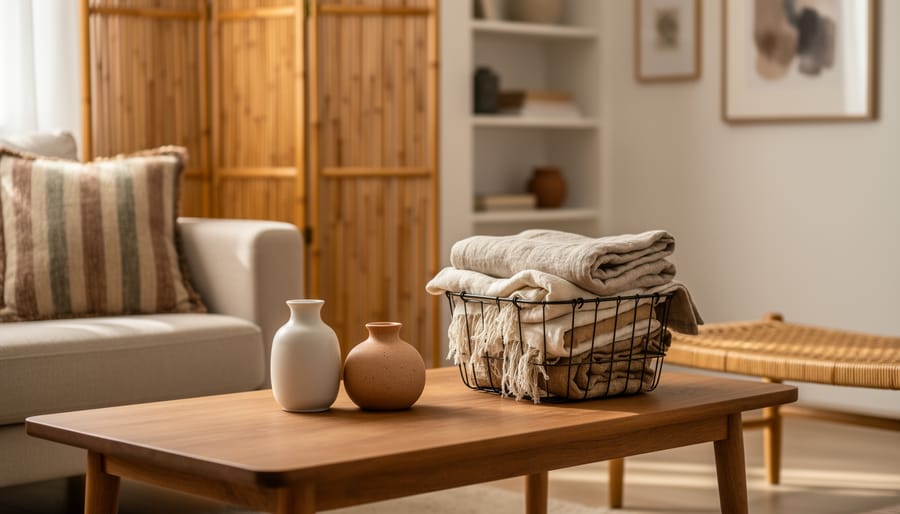
Handcrafted ceramics bring the human touch back. Irregular vases, artisan-made bowls with visible throwing marks, and sculptural pottery pieces contrast beautifully with manufactured furniture. These imperfect objects remind us someone made them.
Mixed metals, brushed brass with matte black, aged copper with stainless steel, add complexity without clutter. The key is choosing two or three metal finishes and repeating them throughout a space in lighting fixtures, hardware, and accessories. This layering approach transforms flat rooms into spaces with visual and physical depth.
Key Elements to Create Contemporary Home Decor
Furniture That Defines the Look
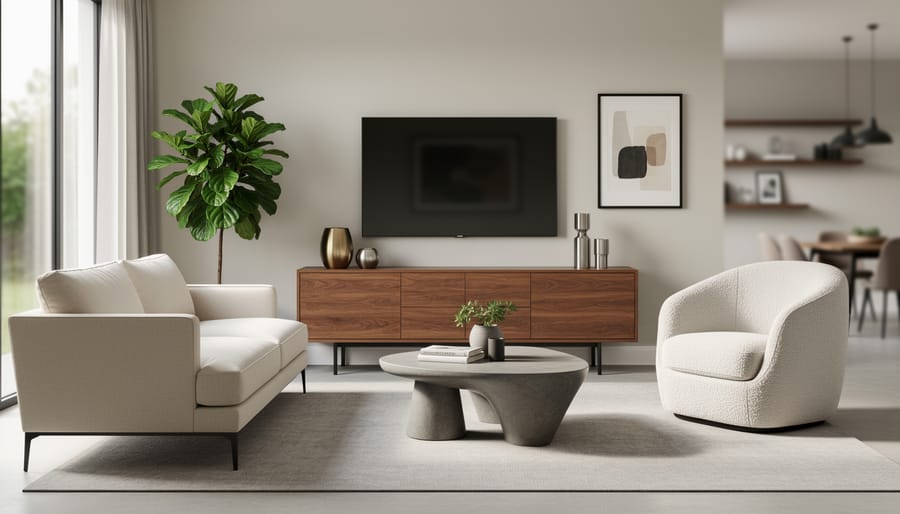
Contemporary furniture in 2026 moves decisively away from the stiff, angular pieces that defined earlier modern design. The hallmark is sculptural seating with rounded arms and curved backs that invite you to sink in, paired with coffee tables featuring organic edges rather than sharp corners. Think sofas with gently sloped armrests and chairs with kidney-shaped backs that echo natural forms rather than geometric precision.
Modular sectionals dominate living spaces because they adapt to different configurations and lifestyles. A three-piece sectional can shift from L-shaped for movie nights to separated individual seats for entertaining, giving you flexibility without buying new furniture. These pieces typically feature low profiles with exposed wooden or metal legs, creating visual breathing room beneath.
Multi-functional designs reflect how we actually live now. Ottomans with hidden storage, coffee tables that lift to dining height, and media consoles with integrated charging stations address real needs without screaming “storage solution.” The finish quality matters here: contemporary pieces showcase craftsmanship through visible wood grain, hand-welded metal joints, or the natural texture of woven cane.
The matching-set approach is dead. Instead, you’re curating a collection where a vintage credenza sits comfortably beside a new sculptural chair, unified by complementary materials and a consistent color temperature. This extends to soft furnishings too. When you choose drapes look for natural linen or textured weaves in earthy tones that echo your furniture’s material story rather than perfectly matching upholstery colors.
The Art of Contemporary Accessorizing
Contemporary accessorizing follows a curator’s mindset: each piece should earn its place through beauty, function, or personal meaning. Start by surveying your space with fresh eyes and removing items that don’t serve one of those three purposes. What remains becomes a stronger, more intentional collection.
Art anchors contemporary rooms but needs breathing space. Choose pieces that resonate personally rather than matching your sofa. A single large-scale abstract painting creates more impact than a gallery wall of small prints, though a carefully edited grouping of three related works can define a focal point. Rotate art seasonally to keep spaces feeling current without buying new furniture.
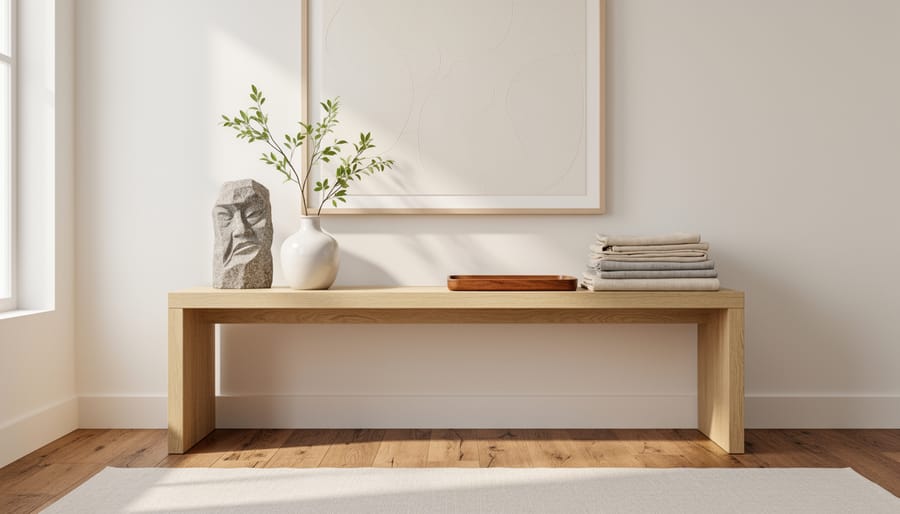
Sculptural objects add dimension without clutter. Look for handcrafted ceramics with organic forms, wooden bowls that showcase natural grain, or oversized mirrors with architectural frames that double as functional art. Group objects in odd numbers on surfaces, varying heights and textures to create visual interest. A tall vase beside a short ceramic dish and a medium-height sculpture forms a more dynamic arrangement than three identical candles in a row.
Plants bring life to contemporary spaces and connect interiors to nature. Choose statement plants like fiddle-leaf figs or bird of paradise for corners, and cluster smaller plants on shelves or tables. Use simple planters in natural materials, terracotta, concrete, woven baskets, that let the greenery take center stage.
Personal items tell your story but need thoughtful display. That collection of vintage cameras becomes art when arranged on floating shelves. Travel souvenirs work better as a small, curated vignette than scattered throughout the room. Even where you place wall clocks matters, treat them as sculptural elements, not afterthoughts.
Where Modern and Contemporary Decor Intersect
Here’s a secret that professional designers know: you don’t have to pick a side. The most compelling interiors in 2026 blur the line between modern and contemporary, and that’s exactly where your home can shine.
Think of modern pieces as the reliable classics in your wardrobe, a mid-century Eames lounge chair or a sleek 1960s credenza with clean lines and tapered legs. These designs have proven their staying power over decades. Contemporary design, meanwhile, is like the seasonal pieces that keep your look current: a curved bouclé sofa in warm sand tones, a sculptural ceramic table lamp, or textured linen curtains that soften the space.
The magic happens when you pair them thoughtfully. That vintage modern sideboard with its walnut finish and brass pulls? It becomes even more striking when you style it with contemporary elements, a cluster of handmade pottery vessels, a statement abstract piece leaning casually against the wall, and a couple of books stacked horizontally. The modern piece provides timeless structure; the contemporary styling keeps it from feeling like a museum display.
What designers call the “transitional” approach is really just permission to be intentional rather than matchy. Your 1950s teak dining table works beautifully with contemporary dining chairs that have organic curves and natural fabric upholstery. The contrast in eras actually highlights the best qualities of each piece, the table’s craftsmanship and the chairs’ current sensibility.
The key is editing. Both modern and contemporary styles reject clutter, so the intersection between them demands even more discipline. Each piece should earn its place through either its design integrity or its function. When you nail this balance, visitors won’t mentally categorize your decor as modern or contemporary, they’ll just know your space feels considered, collected, and completely right for 2026.
Room-by-Room Contemporary Application
Living Spaces That Feel Current
Contemporary living rooms prioritize flexibility over rigid furniture arrangements. Rather than pushing all seating against walls, float a sofa to define zones within an open space, paired with sculptural accent chairs at angles that encourage conversation. The key is creating intimacy without closing off the room. A low-profile sectional in bouclé or linen creates a relaxed anchor, while ergonomic recliners in curved silhouettes add comfort without the bulky aesthetic of traditional recliners.
Coffee table styling has shifted toward intentional curation. Think a single oversized art book, a handmade ceramic bowl, and maybe a small sculptural object, not a cluster of tiny items. Consider nesting tables or organic-shaped pieces that can be repositioned as needed.
For media integration, mount the TV or incorporate it into a wall of natural wood paneling so it recedes when not in use. Hide cables and remote controls in woven baskets. The goal is technology that serves life without dominating the visual landscape. Layer in floor lamps with dimmers, a statement pendant, and natural light to create warmth that makes people want to linger.
Contemporary Kitchens and Dining Areas
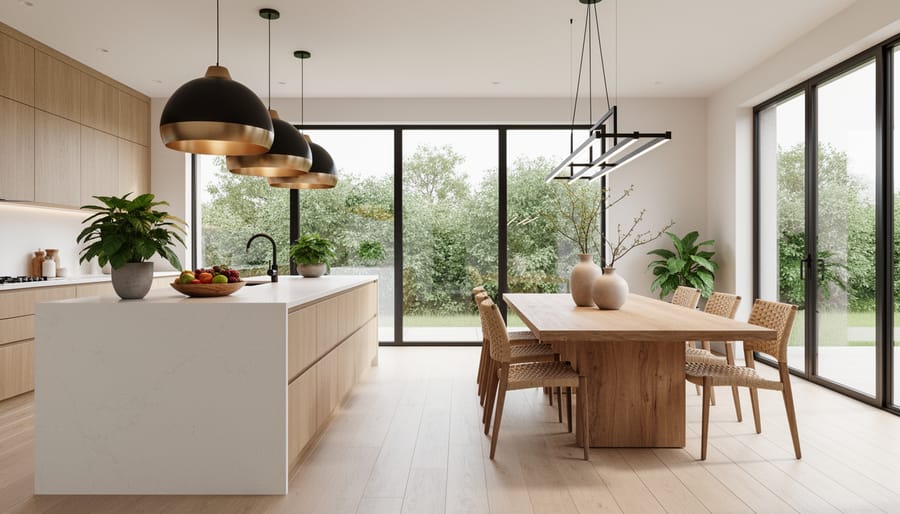
Contemporary kitchens have shed their all-white, sterile reputation. Today’s spaces embrace warm wood tones alongside sleek cabinetry, think walnut uppers paired with matte charcoal lowers, or natural oak floating shelves breaking up smooth lacquered panels. The mixed-material approach extends to countertops, where waterfall-edge quartz meets butcher block islands, creating visual interest without clutter.
Open shelving remains popular, but with a curated twist. Instead of exposing everything, contemporary kitchens feature strategic open sections displaying handmade ceramics or glassware, while closed cabinetry conceals everyday items. This edited visibility keeps spaces feeling airy yet functional.
Statement lighting has become the jewelry of these rooms. Oversized pendants in organic shapes, rattan domes, sculptural glass clusters, or hammered metal, hang low over islands and dining tables, defining zones within open-plan layouts. These fixtures anchor the space while the kitchen itself flows seamlessly into living areas, with islands doubling as casual dining spots and counters extending into workspaces. The boundary between cooking and gathering has essentially dissolved, making the kitchen a true living space rather than a separated work zone.
Bedrooms and Private Retreats
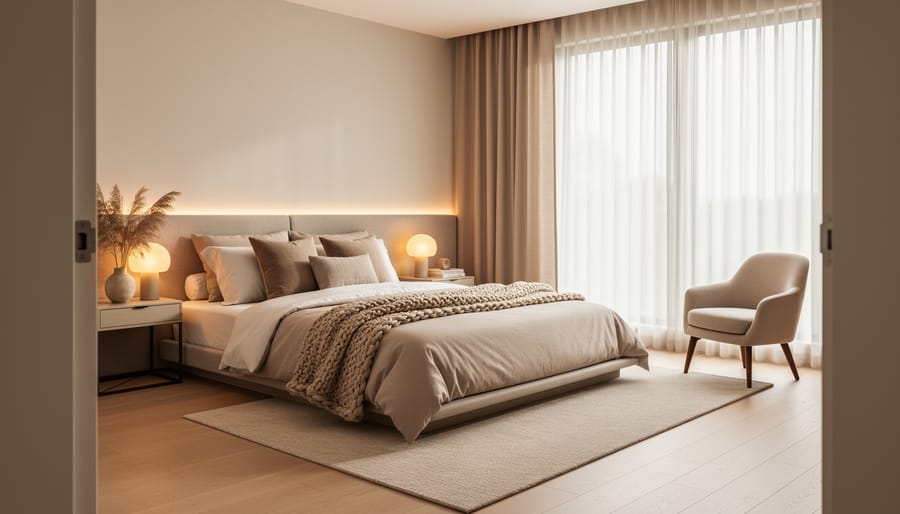
Contemporary bedrooms in 2026 prioritize rest and restoration over decoration. Start with a low-profile platform bed in natural wood or upholstered linen, the focal point should ground the room without dominating it. Flank it with simple nightstands, perhaps asymmetrical in height or material, and keep surfaces clear except for a single lamp and one personal object.
Layering textiles creates the sensory warmth contemporary design needs. Begin with high-quality cotton or linen sheets in neutral tones, add a textured coverlet or quilt in a complementary earthy shade, then finish with two or three pillows in varying sizes and fabrics, waffle weave, bouclé, or raw silk. A chunky knit throw draped at the foot adds tactile interest without clutter.
Natural materials extend beyond the bed. Consider a jute or wool rug underfoot, rattan pendant lighting, or stone accents on a dresser. These organic elements balance any technology in the space and support the wellness focus driving bedroom design now.
For dressing areas, proper vanity mirror lighting matters, it affects morning routines and overall room ambiance. Integrated lighting should be warm-toned and dimmable, supporting the room’s calm atmosphere rather than disrupting it with harsh illumination.
Staying Current: Where to Find Contemporary Design Inspiration
Contemporary design evolves quickly, which means staying inspired requires tapping into the right sources at the right time. The good news? You don’t need an industry insider pass to keep your finger on the pulse of what’s current.
Design fairs offer the most concentrated dose of what’s shaping the industry. ICFF, North America’s leading contemporary design fair, takes place May 17-19, 2026 in New York City and showcases emerging designers alongside established names. Closer to home for Canadians, the Interior Design Show in Vancouver runs September 24-27, 2026, bringing together exhibitors and design professionals for four days of inspiration. These events let you see new materials, finishes, and furniture in person, something no screen can replicate.
Between major events, build a steady stream of inspiration from these reliable sources:
- Design magazines like Dwell, Architectural Digest, and Azure focus heavily on contemporary projects with detailed photography
- Instagram accounts of contemporary furniture brands and interior designers show real implementations rather than staged perfection
- Showrooms in major cities let you touch materials and test furniture scale against your own body
- Decor SDA’s library of 435+ million HD images provides filtered, high-quality visuals for mood boards and client presentations
- Trade-specific platforms offer professional development courses that deepen your understanding of design principles
The trick isn’t consuming more inspiration but filtering it effectively. When you see a trend, ask whether it solves a functional problem or simply looks fresh for now. Contemporary design that lasts balances current aesthetics with timeless principles: good proportions, quality materials, and intentional editing.
For professionals in the industry, these resources represent more than inspiration, they’re career development tools. The interior design field continues to expand, with the home decor market expected to reach USD 258.1 billion in 2026. Understanding what drives contemporary design helps you serve clients better and position yourself as someone who gets what’s happening now, not what was popular three years ago. Start with one trusted source, visit one fair if possible, and let your taste develop through consistent exposure rather than chasing every trend that surfaces.
Contemporary home decor isn’t reserved for design professionals with unlimited budgets. The movement’s remarkable growth, Canada’s market alone reached USD 16,298.62 million in 2025, proves that this approach resonates with everyday homeowners making intentional, accessible choices about their spaces.
Start small. Pick one room where you spend the most time and apply what you’ve learned: edit down to meaningful pieces, layer natural textures, bring in organic shapes, and let the space breathe. Trust your instincts when something feels right, even if it breaks a traditional design rule. Contemporary style rewards personal expression over strict adherence to formulas.
Remember that contemporary design evolves alongside you. The pieces you choose today can adapt as your life changes and as design itself shifts. A well-selected contemporary sofa works beautifully now and will still feel relevant in five years because the principles underlying the style, functionality, intentionality, comfort, connection to nature, remain constant even as surface trends shift.
The principles we’ve covered give you a framework, not a rigid blueprint. Your contemporary space should reflect how you actually live, incorporating the materials, colors, and forms that make sense for your daily routines and bring you genuine satisfaction. That’s the real difference between following trends and creating a home that truly works.