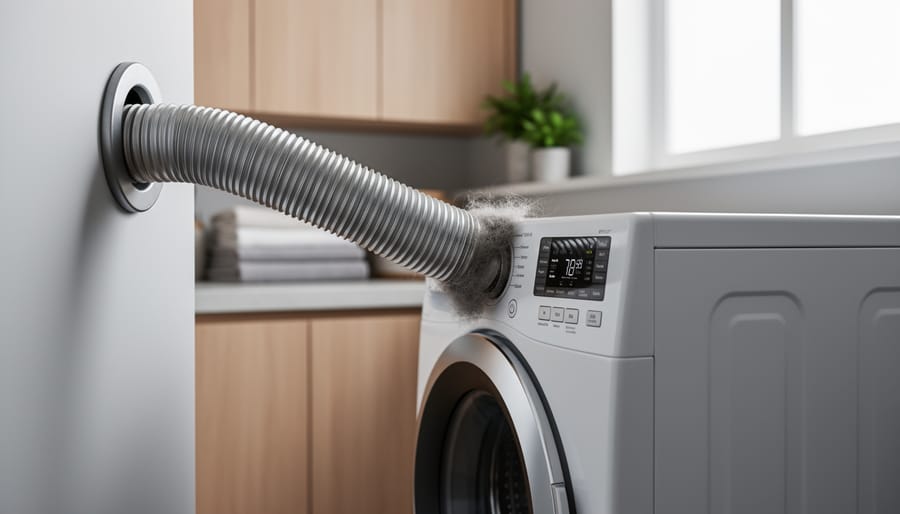
Position your dryer against an exterior wall to minimize vent run distance and reduce lint accumulation that creates fire hazards. Your laundry room deserves more than just functionality—it’s a space where smart design meets critical safety, and understanding this connection will transform how you approach both aesthetics and home maintenance. To learn more about professional vent cleaning services that protect your beautifully designed space, exploring expert resources becomes essential.
The truth is that dryer vents rank among the most overlooked safety concerns in home design, with clogged vents causing thousands of house fires annually. Yet this vital element rarely appears in design plans or Pinterest boards showcasing stunning laundry spaces. When you integrate vent placement, accessibility, and cleaning considerations into your initial design phase, you create a room that’s not only visually appealing but genuinely safe and efficient for years to come.
This comprehensive guide bridges the gap between inspiring laundry room design and essential maintenance practices. You’ll discover how to incorporate accessible vent systems into various design styles, select materials that facilitate easy cleaning, arrange appliances for optimal airflow, and create maintenance schedules that preserve both your room’s beauty and your family’s safety. Whether you’re planning a complete renovation or refreshing your current space, these strategies ensure your laundry room works as beautifully as it looks.
The Invisible Threat Behind Your Dryer
Hidden behind your dryer’s sleek exterior lies a ventilation system that’s easy to forget but impossible to ignore when problems arise. Your dryer vent is essentially a ductwork pathway that channels hot, moist air and lint particles from your dryer to the outside of your home. Every time you dry a load of laundry, tiny fibers escape the lint trap (yes, even when you clean it religiously) and travel through this duct system, gradually building up along the walls.
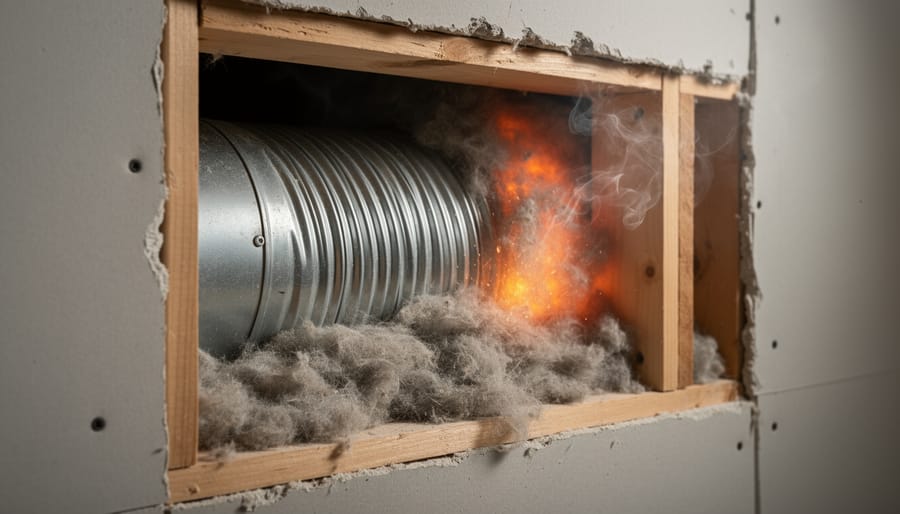
Think of it like your home’s circulatory system, but instead of blood, it’s moving heated air mixed with fabric particles. Over time, this creates a fuzzy, highly flammable coating inside the vent that restricts airflow. It’s a silent accumulation happening in the shadows of your beautifully designed laundry space.
The risks associated with clogged dryer vents extend far beyond inconvenience. Fire hazards top the list, with thousands of home fires annually traced back to lint buildup igniting from the dryer’s heating element. Picture all those tiny fibers compressed into a dense, combustible layer, and you’ll understand why this maintenance task deserves serious attention.
For gas dryers, there’s an additional concern: carbon monoxide buildup. When vents become blocked, this odorless, colorless gas can’t escape properly and may seep back into your living spaces, creating a genuine health emergency.
Beyond safety, clogged vents sabotage your dryer’s efficiency. You’ll notice clothes taking multiple cycles to dry, higher energy bills, and excessive heat building up in your laundry room. Your dryer works harder, wears out faster, and costs you more money, all while compromising the safety of your home.
Understanding these invisible threats transforms dryer vent maintenance from an afterthought into a design priority. When planning your laundry room layout, accessibility to your vent system isn’t just practical; it’s a cornerstone of responsible home design that protects both your investment and your family.
Designing Your Laundry Room Around Dryer Vent Safety
Strategic Dryer Placement for Optimal Venting
When designing your dream laundry room, one of the smartest decisions you can make happens before you choose your first paint swatch or Pinterest-worthy basket. Strategic dryer placement isn’t just about function—it’s the foundation that allows your beautiful design to work effortlessly for years to come.
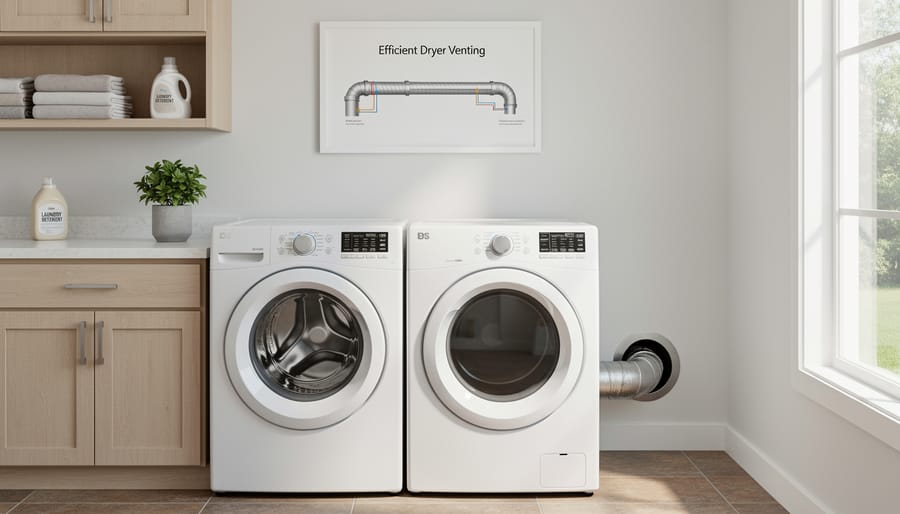
Picture your ideal laundry space: perhaps it features custom cabinetry, a charming farmhouse sink, and perfectly coordinated finishes. Now imagine that same space with your dryer positioned against an exterior wall, with its vent running straight out in the shortest possible path. This simple positioning choice transforms routine maintenance from a headache into a breeze, all while maintaining your design vision.
The golden rule is keeping your dryer as close to an exterior wall as possible. Think of vent ducting like a hallway—the shorter and straighter it is, the better everything flows. When dryers exhaust through long, winding paths, lint accumulates faster, efficiency drops, and safety risks increase. Ideally, your vent run should be less than 25 feet with minimal turns. Each 90-degree elbow you add reduces the effective length by about 5 feet, so those corners really add up.
Does this mean sacrificing your design aesthetic? Absolutely not. Consider creating a dedicated dryer alcove along an exterior wall, flanked by tall storage cabinets that draw the eye upward. Or position your appliances on the wall that faces outside, then build your folding station and decorative elements around them. You can even use attractive vent covers on the exterior that complement your home’s architectural style.
The beauty of thoughtful dryer placement is that it becomes invisible to guests admiring your space, yet it quietly protects your home and makes vent cleaning appointments quick and straightforward. That’s design working in perfect harmony with real life.
Materials and Finishes That Make Maintenance Easier
The materials you select for your dryer venting system dramatically impact both safety and maintenance frequency. Think of this decision as choosing between a sleek, easy-to-clean tile backsplash and one with countless grout lines—the right choice saves you hours of work later.
For venting, rigid metal ducts are the gold standard. Unlike their flexible foil counterparts, which create lint-trapping ridges reminiscent of an accordion, smooth rigid aluminum or galvanized steel allows air to flow freely while preventing dangerous lint buildup. Picture water flowing through a straight pipe versus a corrugated hose—the same principle applies here. These durable ducts maintain their shape, resist crushing, and won’t sag over time, making inspection and cleaning remarkably straightforward.
Your exterior vent cover deserves equal attention. Select models with hinged flaps or magnetic closures that prevent pest entry while remaining accessible for routine cleaning. Many contemporary designs now feature low-profile covers in various finishes—from classic white to bronze and brushed nickel—that complement your home’s architectural style rather than standing out as utilitarian eyesores.
Inside your laundry space, surround the dryer area with heat-resistant, non-porous materials. Ceramic or porcelain tile, quartz countertops, and sealed concrete floors withstand high temperatures while wiping clean effortlessly. Avoid materials that trap lint or deteriorate with heat exposure, such as unsealed wood or textured wallpaper. Smooth, washable paint in semi-gloss or satin finishes allows you to quickly wipe away dust and lint that inevitably escapes during laundry sessions, keeping your beautiful design looking fresh with minimal effort.
Creating Access Points Without Sacrificing Style
A beautiful laundry room shouldn’t compromise safety, and maintaining your dryer vent doesn’t have to disrupt your carefully curated design. The secret lies in planning strategic access points from the very beginning of your design process.
Consider installing decorative access panels that blend seamlessly with your wall treatments. These removable sections can be painted to match surrounding walls or covered with the same wallpaper pattern, making them virtually invisible to the untrained eye. Magnetic push-to-open panels offer a particularly sleek solution, eliminating the need for visible hardware that might interrupt your design flow.
Cabinet solutions offer another elegant approach. Design base cabinets with removable back panels where your dryer vent runs through, similar to accessible storage solutions in bathrooms. These panels can be secured with simple screws or cam locks, allowing technicians to complete thorough cleanings without dismantling your entire cabinetry system. Some designers incorporate dedicated utility cabinets with full-size doors positioned at key vent access points, disguising them as standard storage while serving a crucial maintenance function.
For rooms with exposed ductwork that you’ve incorporated as an industrial design element, you’re already ahead of the curve. The transparency of this approach celebrates function as form while providing complete access for regular cleaning services.
Think of these access points as you would clever storage designs in other areas of your home. They’re intentional features that enhance your space’s functionality without advertising their purpose. When you communicate your maintenance needs to contractors or cabinet makers during installation, they can create custom solutions that preserve your aesthetic vision while ensuring your dryer vent remains safely accessible for professional cleaning throughout the years ahead.
Warning Signs Your Dryer Vent Needs Professional Attention
Your beautifully designed laundry room deserves to function as flawlessly as it looks, and recognizing when your dryer vent needs professional attention is crucial for both safety and performance. Think of these warning signs as your home’s way of asking for help.
One of the most telling indicators is extended drying time. If your towels that once dried in 45 minutes now take two full cycles, your vent is likely struggling with restricted airflow. This isn’t just inconvenient; it’s your dryer working overtime, which increases energy costs and wear on the appliance itself.
Pay attention to unusual heat levels. When you open the dryer door and feel excessive heat radiating from your clothes, or notice the exterior of the machine is hot to the touch, this signals trapped heat that should be venting outside. Similarly, if your laundry room feels like a sauna during drying cycles, the humid air isn’t escaping properly.
A burning smell is perhaps the most urgent warning sign and should never be ignored. This odor often comes from lint buildup heating to dangerous temperatures. If you detect this scent, stop using the dryer immediately and schedule professional cleaning.
Visual cues around your space are equally important. Visible lint accumulation around the dryer door, on nearby surfaces, or outside the exterior vent opening indicates your system isn’t efficiently expelling debris. You might also notice a musty odor on supposedly clean clothes, which happens when moisture can’t escape and creates the perfect environment for mildew.
The exterior vent hood provides valuable clues too. Step outside during a drying cycle and check if the flap opens properly and releases visible steam. If it remains closed or barely moves, you have a blockage problem.
Trust your instincts when something feels off. These warning signs rarely appear in isolation, and addressing them promptly protects your investment in both your beautiful laundry space and your family’s safety.
What Professional Dryer Vent Cleaning Services Actually Do
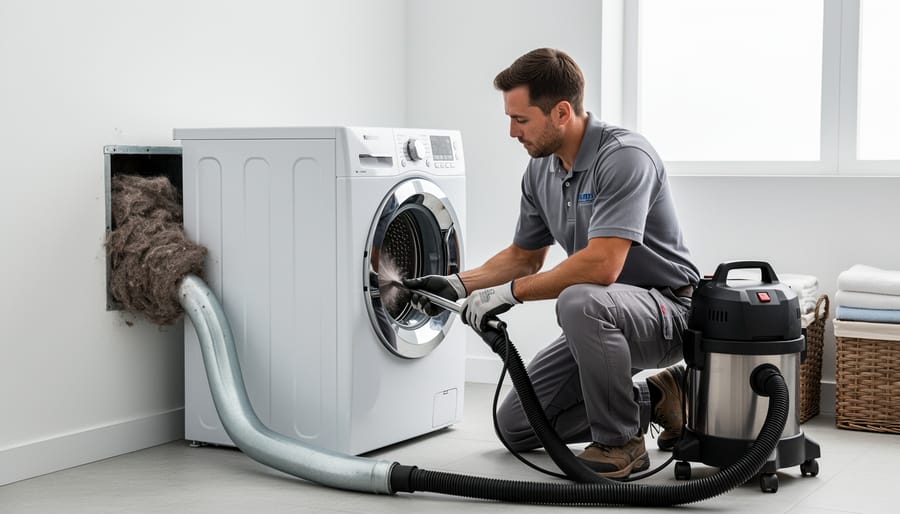
Understanding what professionals actually do during dryer vent cleaning helps you appreciate why this service goes far beyond what you can accomplish with a vacuum attachment. Picture certified technicians arriving with specialized equipment designed specifically for this task—industrial-grade rotary brushes, high-powered vacuums, and inspection cameras that can navigate the entire length of your vent system.
The process begins with a thorough inspection, often using video equipment to identify problem areas, blockages, and the overall condition of your ductwork. Professionals then disconnect the dryer and access both ends of the vent system, ensuring complete cleaning from the appliance to the exterior exhaust point. Their rotating brush systems, which extend up to 40 feet or more, scrub the interior walls of your vent ducts while powerful vacuums simultaneously capture all the loosened lint and debris.
What makes professional service truly valuable is their ability to clean those hard-to-reach sections—the twists, turns, and vertical runs that DIY methods simply cannot address effectively. They also check for proper installation, adequate airflow, damaged ductwork, and code compliance issues that could compromise both efficiency and safety.
Most professionals recommend annual cleaning for typical households, though frequency increases to every six months for larger families or homes where the dryer runs daily. Homes with pets that shed heavily may also benefit from more frequent service.
While regularly cleaning your lint trap and occasionally vacuuming the area behind your dryer are important maintenance tasks, they only address surface-level accumulation. The real danger lurks deep within your vent system, where professional-grade equipment becomes essential. Think of it this way: you’re not just paying for cleaning—you’re investing in fire prevention, energy efficiency, and peace of mind that your beautifully designed laundry room remains safe and functional.
Design Elements That Promote Long-Term Vent Health
Ventilation and Airflow Considerations
Imagine your dryer working effortlessly while your laundry room stays fresh and moisture-free—that’s the magic of thoughtful ventilation design. Proper airflow isn’t just about functionality; it transforms your space into a healthier, more efficient environment that looks as good as it performs.
Strategic window placement serves double duty in laundry room design. Natural light creates an uplifting atmosphere while windows provide essential cross-ventilation to expel humid air laden with lint particles. Position windows near your dryer when possible, allowing moisture and airborne lint to escape naturally rather than settling on surfaces or hiding in corners.
Consider incorporating an exhaust fan alongside your dryer vent system. This partnership works beautifully to maintain consistent air circulation, preventing that damp, stuffy feeling that often plagues enclosed laundry spaces. The exhaust fan pulls moisture away while your properly cleaned dryer vent expels it efficiently outside.
Air circulation also prevents condensation buildup on walls and ceilings—moisture that can trap lint and create maintenance headaches. Installing louvered doors or leaving a small gap beneath solid doors encourages continuous airflow throughout the space. This simple design choice supports your dryer’s performance while keeping your beautifully designed laundry room pristine and problem-free.
Storage Solutions for Maintenance Tools
Transform maintenance into an effortless routine by incorporating dedicated storage solutions directly into your laundry room design. Designate a slim pullout drawer or wall-mounted cabinet specifically for dryer vent brushes, lint removal tools, and cleaning supplies. Consider installing a magnetic strip inside a cabinet door to hold metal-handled brushes, keeping them visible and accessible. Floating shelves with labeled baskets create an organized system where each maintenance tool has its designated home. For smaller spaces, repurpose an over-the-door organizer with clear pockets to display cleaning essentials at eye level. This intentional placement transforms routine maintenance from an afterthought into a natural part of your laundry day workflow, ensuring safety tools remain within arm’s reach when needed most.
A beautifully designed laundry room doesn’t require compromising on safety. In fact, the most successful spaces seamlessly blend visual appeal with practical functionality, making dryer vent maintenance a natural extension of thoughtful home design. By incorporating accessible vent systems, choosing durable materials, and creating spaces that invite regular care, you’re investing in both the beauty and longevity of your home. Think of professional dryer vent cleaning services as essential to your home maintenance routine, just like seasonal décor updates or deep cleaning. Schedule annual inspections to keep your space running efficiently while protecting your family. When safety becomes part of your design philosophy rather than an afterthought, your laundry room transforms into a space that’s as responsible as it is inspiring.