
Interior designers today have seven distinct partnership avenues to grow their practice: vendor collaborations, architect alliances, real estate agent networks, builder partnerships, fellow designer co-ventures, brand ambassadorships, and trade professional referral systems. Each model offers unique revenue streams, client access, and creative opportunities, but choosing the right fit depends on your design niche, business stage, and local market dynamics.
The design industry has shifted dramatically toward collaborative business models. Solo practitioners who once relied purely on direct client acquisition now find that strategic partnerships can double their project pipeline while reducing marketing costs by up to 40%. These relationships work because they create mutual value: a builder gains access to your design expertise and client management skills, while you receive consistent project flow and construction knowledge that elevates your deliverables.
Understanding which partnership type aligns with your practice requires looking beyond surface-level benefits. A furniture showroom collaboration might seem appealing for the commission structure, but if your aesthetic doesn’t match their inventory, you’ll compromise your portfolio for modest financial gain. Conversely, an architect partnership demands more coordination and longer timelines but often leads to higher-budget residential projects and commercial opportunities that transform your business trajectory.
The partnerships you cultivate will shape not just your revenue but your creative direction and professional reputation. A thoughtfully chosen collaboration becomes a growth engine, while a mismatched one drains time without delivering results. The key lies in recognizing which models complement your strengths, serve your ideal clients, and support the vision you’re building. When paired with strong 2026 design visuals in your portfolio, these partnerships position you as both a creative talent and a valuable business ally.
How We Identified These Partnership Types
Selecting these seven partnership types required evaluating dozens of collaborative models that interior designers encounter throughout their careers. We didn’t simply list every possible business relationship, instead, we applied rigorous criteria to identify partnerships that genuinely move a design practice forward.
Each partnership type in this guide met five essential benchmarks:
- Delivers measurable business value through cost savings, revenue growth, or operational efficiency
- Remains accessible to designers at different career stages, from recent graduates to established firms
- Provides complementary skills or resources that fill genuine gaps in a designer’s capabilities
- Shows proven success models with documented examples in the interior design industry
- Offers scalability that grows alongside the designer’s practice and evolving needs
These benchmarks ensured we focused on partnerships with real staying power rather than fleeting trends. A furniture manufacturer relationship, for instance, delivers tangible discounts and custom capabilities while remaining relevant whether you’re furnishing your first client project or your hundredth. Similarly, architect collaborations scale from single-room renovations to whole-home transformations as your practice matures.
The seven types collectively represent the full collaborative spectrum available to designers in 2026. Some partnerships, like vendor networks and contractor alliances, support the operational backbone of your projects. Others, such as showroom collaborations and digital platform relationships, extend your market reach and professional visibility. Designer-to-designer partnerships fill skill gaps, while manufacturer and architect relationships elevate the caliber of work you can deliver.
Together, these partnership categories address every major business function a designer manages: sourcing, execution, marketing, professional development, and service delivery. Most successful designers maintain active relationships across multiple types simultaneously, creating a robust support ecosystem for their practice.
1. Furniture Manufacturer Partnerships: Direct Access to Custom Solutions
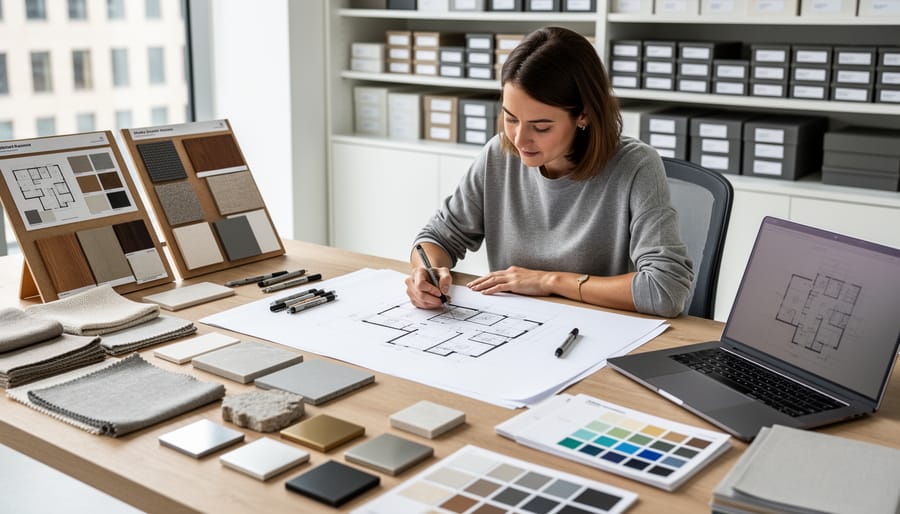
Working directly with furniture manufacturers gives designers access to custom pieces that can’t be found in retail showrooms. These partnerships typically offer 20-40% trade discounts, priority production scheduling, and the ability to modify existing designs or create entirely new pieces for clients.
The customization factor transforms how you serve clients. Instead of saying “this sofa almost works,” you can adjust arm height, change cushion depth, select custom fabrics, or modify leg styles to match the exact vision. Manufacturers like those specializing in mid-century modern or traditional upholstery often welcome design input because it showcases their craftsmanship in new ways.
Cost savings benefit both you and your clients. Trade pricing allows you to maintain healthy margins while offering competitive project budgets. Some designers mark up at cost-plus rates, others use flat design fees, the discount structure supports either business model. Beyond immediate savings, these relationships often include volume discounts as your partnership grows.
Building a signature style becomes easier when you work with the same manufacturers consistently. Clients start recognizing your aesthetic partly through the quality and character of the pieces you specify. A designer known for sleek, architectural furniture often develops deep relationships with manufacturers who excel in clean-lined, precision work.
To establish these partnerships, start by identifying manufacturers whose existing work aligns with your design direction. Most require proof of your professional status, business license, design credentials, or portfolio showing completed projects. Manufacturers look for designers who understand their product capabilities, communicate specifications clearly, and bring consistent business rather than one-off orders.
The application process usually involves completing a trade account form and providing tax identification. Some manufacturers approve immediately; others review portfolios before granting trade access. Once approved, you’ll work with dedicated account representatives who understand design timelines and can expedite custom orders when projects demand quick turnarounds.
2. Architect-Designer Collaborations: Integrated Design from Blueprint to Finish
Architect-designer collaborations represent one of the most powerful partnership models in the interior design industry, particularly for large-scale residential renovations and new construction projects. When interior designers and architects work together from a project’s earliest stages, they create spaces where form, function, and aesthetics flow seamlessly from structural elements through decorative finishes.
The division of responsibilities in these partnerships typically follows a logical progression. Architects handle structural design, building codes, permits, and the technical aspects of creating safe, functional spaces. Interior designers bring spatial planning expertise, material selection, color theory, and the detailed styling that transforms architectural shells into livable environments. The magic happens in the overlap, when architects consider furniture placement during room sizing and designers understand load-bearing limitations that affect their layouts.
Successful architect-designer partnerships rely on early and continuous communication. The best collaborations start during schematic design, when structural decisions like ceiling heights, window placement, and spatial flow can still accommodate interior design needs. Regular coordination meetings prevent costly conflicts where a beautifully designed kitchen island conflicts with structural columns, or planned built-ins don’t align with electrical layouts.
These partnerships elevate both disciplines by pushing each professional to consider aspects beyond their traditional scope. Architects gain insight into how clients actually use spaces, while designers develop stronger technical knowledge that makes their concepts more buildable. Clients benefit from cohesive design solutions where interior and architectural elements complement rather than compete with each other.
For designers looking to establish architect partnerships, start by identifying architects whose aesthetic sensibility aligns with your design philosophy. Attend local AIA chapter meetings, reach out with portfolio samples showing your understanding of spatial planning, and demonstrate how your involvement early in the process adds value to their projects. These relationships often begin with one collaborative project and grow into ongoing referral partnerships as both parties experience the benefits of integrated design.
3. Vendor Network Partnerships: Building Your Trade Resource Community

Building a network of trusted vendors transforms your design practice from a series of one-off purchases into a streamlined resource ecosystem. When you establish ongoing partnerships with tile suppliers, lighting specialists, textile dealers, and artisans, you gain access to trade pricing, priority service, and insider knowledge that elevates every project.
Trade program benefits extend far beyond simple discounts. Most vendors offer designers 20-40% off retail pricing, but the real value lies in early access to new collections, customization options, and the ability to request samples without minimum orders. A lighting specialist who knows your aesthetic preferences can alert you when fixtures matching your vision arrive, while a textile dealer familiar with your client base can set aside exclusive fabrics before they hit the showroom floor.
These partnerships dramatically improve project timelines. When your tile supplier knows you need materials for an installation starting in three weeks, they prioritize your order and alert you to potential delays. Your upholstery artisan blocks time in their schedule based on your typical project rhythm. This coordination prevents the costly delays that frustrate clients and erode profit margins.
Client satisfaction benefits directly from vendor partnerships. You can confidently quote lead times, access problem-solving expertise when installation challenges arise, and tap vendor knowledge to recommend the best product for each application. A client asking about durable dining fabrics gets a recommendation backed by your textile partner’s technical specs and real-world performance data, not just catalog descriptions.
Start building your vendor network by identifying the five product categories you specify most frequently. Research which suppliers offer designer trade programs, visit their showrooms, and request partnership terms. Commit to placing regular orders with two to three vendors per category rather than spreading purchases thinly across many sources, concentrated buying power strengthens relationships and increases your value as a partner.
4. Designer-to-Designer Partnerships: Complementary Skills and Shared Projects
Working with another interior designer might seem counterintuitive, but peer partnerships represent one of the smartest growth strategies available in 2026. These collaborations let you take on projects outside your comfort zone, fill skill gaps, and serve clients better without the overhead of hiring employees.
The most successful designer-to-designer partnerships unite complementary strengths. A residential specialist might team with a commercial expert when a long-time client needs office space designed. A designer skilled in traditional aesthetics could partner with someone who excels at contemporary minimalism for a client wanting both styles in different rooms. One designer strong in creative vision might collaborate with another who brings exceptional project management and budgeting skills.
These partnerships typically take three forms. Profit-sharing arrangements work when both designers contribute actively to a project, one might handle client relations and concept development while the other manages sourcing and installation, splitting the fee 50-50 or according to contribution level. Referral partnerships involve passing clients to a peer whose specialty fits better, often with a 10-15% referral fee or reciprocal agreement. Co-working partnerships let designers share studio space, administrative costs, and even staff while maintaining separate businesses and client bases.
The financial model matters less than clear expectations. Successful partnerships define upfront who handles which responsibilities, how decisions get made, what happens if scope changes, and how profits divide. Put everything in writing, even with friends.
Start these relationships small. Take on one project together before committing to ongoing collaboration. Pay attention to communication styles, work ethic, and whether your design philosophies complement rather than clash. The right peer partnership feels like having a business partner without the formal commitment, giving you flexibility to scale services up or down as opportunities arise while keeping your practice lean and adaptable.
5. Contractor and Tradesperson Alliances: Execution Excellence
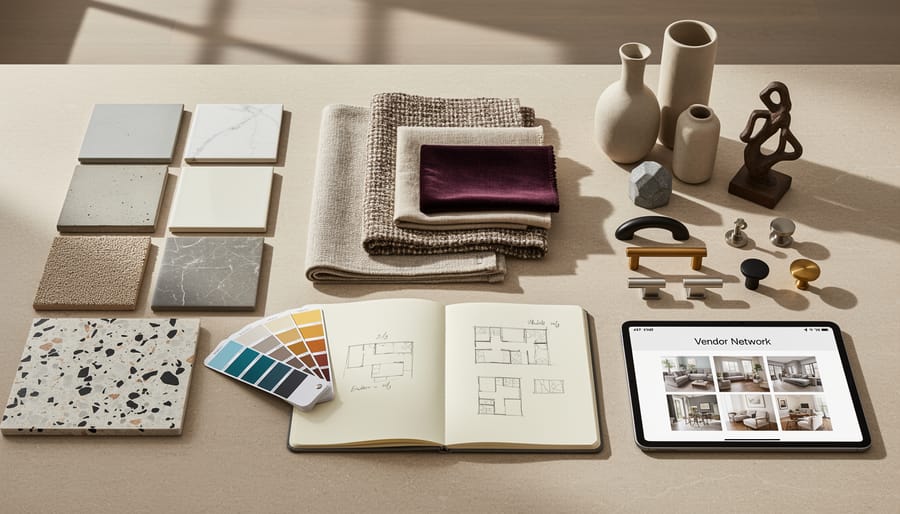
Your design vision stays a concept until skilled hands bring it to life. The contractors, painters, electricians, and specialized tradespeople you partner with determine whether your carefully planned spaces translate into reality or get lost in execution gaps. Strong tradesperson alliances turn the installation phase from a stressful oversight burden into a collaborative refinement process.
Start building your preferred contractor roster by vetting through small test projects before committing them to major client work. Request references from other designers, not just homeowners, designers evaluate different quality markers than typical clients. Look for tradespeople who ask clarifying questions about your drawings, suggest practical solutions when they spot potential issues, and photograph their completed work with the same care you’d apply to portfolio shots. These signals indicate they understand the design-build relationship extends beyond basic functionality.
Establish clear communication protocols from your first project together. Share your interior design image repository and stunning design inspiration references during planning meetings so contractors see the finished vision, not just technical specifications. Create a standard detail sheet that documents your expectations, paint application techniques, grout line widths, hardware installation heights, so quality standards don’t require re-explaining on every project.
The payoff compounds over time. Contractors who’ve worked with you repeatedly develop intuition about your preferences, catch potential problems before installation day, and protect your design intent when field conditions require adjustments. They become an extension of your practice, often suggesting better methods or materials based on what they’ve learned from your past projects together. This institutional knowledge can’t be hired on demand, it grows from consistent partnership and mutual respect for each profession’s expertise.
6. Retail and Showroom Partnerships: Visibility and Client Engagement
Retail and showroom partnerships put your work directly in front of clients actively shopping for design solutions. By collaborating with furniture stores, home décor boutiques, and design showrooms, you gain physical visibility in spaces where your ideal clients already spend time. These partnerships typically involve creating staged room displays, offering in-store consultations, or maintaining a permanent portfolio presence within the retail environment.
The most common arrangement involves staged displays where you design complete room settings using the retailer’s inventory. You showcase your ability to combine pieces into cohesive environments, demonstrating modern space ideas that inspire shoppers and drive sales. Retailers benefit from professional merchandising that elevates their brand, while you benefit from constant exposure to potential clients who appreciate your aesthetic.
Revenue-sharing models vary widely. Some designers receive commission on furniture purchases resulting from their displays or consultations, typically ranging from five to fifteen percent. Others work on a flat monthly fee to maintain and refresh displays. A hybrid approach combines both, providing baseline compensation plus performance incentives. Negotiate terms that reflect your time investment and the sales lift your expertise brings to the retailer.
In-store consultation hours create direct client contact. You might staff the showroom one or two days weekly, helping shoppers with space planning, colour selection, and purchase decisions. These interactions often convert to full-service residential projects when clients realize they need comprehensive design support.
Portfolio showcase opportunities allow you to display a high-resolution portfolio book or digital screen showing your completed projects. This positions you as the showroom’s design expert and establishes credibility with shoppers seeking professional assistance. Choose retail partners whose aesthetic aligns with your design philosophy and whose clientele matches your target market, ensuring that the exposure you gain translates into projects you want to pursue.
7. Digital Platform and Media Partnerships: Expanding Your Professional Reach
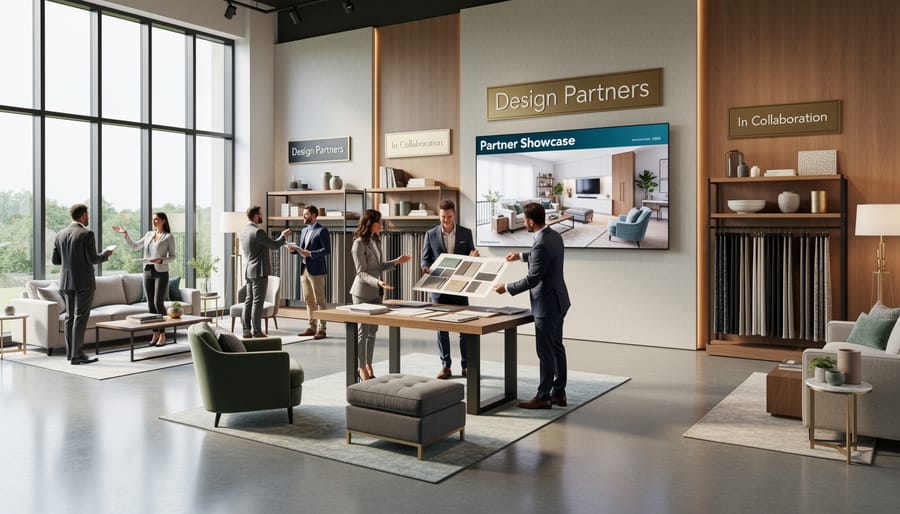
Digital platform and media partnerships offer interior designers visibility and credibility that traditional marketing can’t match. These collaborations position you as a thought leader while connecting you with potential clients, industry peers, and valuable resources, often at no cost beyond your time and expertise.
Design platforms provide portfolio hosting that showcases your work to audiences actively seeking design inspiration and professional services. Platforms like Decor SDA offer free image libraries, article content, and professional development resources that support your practice while amplifying your visibility. By contributing case studies or participating in featured designer programs, you gain exposure to thousands of design enthusiasts who might become your next clients or collaborators.
Interior design publications, both print and digital, extend your reach beyond your immediate network. Guest articles, project features, and expert commentary establish your authority on specific topics or styles. These partnerships work on mutual benefit: publications need quality content and authentic designer perspectives, while you gain bylines, portfolio exposure, and third-party credibility that enhances client trust.
Online marketplaces and sourcing platforms create partnership opportunities through product curation, styled room features, and designer discount programs. Many offer trade accounts that provide both purchasing advantages and promotional exposure when you specify their products in published projects.
The key is selecting platforms that align with your design specialty and target audience. A residential designer focused on coastal interiors benefits more from lifestyle publications and platforms with strong visual storytelling than from commercial design databases. Start with one or two strategic partnerships, contribute consistently, and track which channels drive meaningful engagement with your ideal clients.
Choosing the Right Partnership Mix for Your Design Practice
The partnerships that transform your design business aren’t the ones you pursue all at once, they’re the ones you build intentionally, starting with your most pressing needs. New designers often benefit from establishing vendor network partnerships first, securing reliable trade resources and cost advantages that immediately improve project margins. As your practice matures, add architect collaborations if you’re moving into renovation work, or retail partnerships if lead generation tops your priority list.
Your design specialty naturally guides partnership selection. Residential designers focusing on high-end custom interiors prioritize furniture manufacturer relationships and contractor alliances. Commercial designers lean heavily on architect collaborations and digital platform partnerships for portfolio visibility. Boutique designers serving niche markets, coastal homes, sustainable design, period restoration, gain the most from designer-to-designer partnerships that complement rather than compete with their expertise.
Most established designers maintain three to five active partnership types simultaneously, creating a support ecosystem rather than relying on any single relationship. Start with one or two partnerships that address immediate challenges, maybe a trusted contractor who executes your vision flawlessly, paired with vendor relationships that improve your purchasing power. Build from there as opportunities arise organically through project work and professional interactions.
How do I approach potential partners without seeming pushy?
Lead with what you can offer them, referrals, exposure, reliable business, rather than what you need. Frame initial conversations as exploratory, asking about their preferred ways of working with designers before proposing anything formal.
What should partnership agreements include?
Cover scope of collaboration, financial arrangements (discounts, commissions, profit-sharing), communication expectations, project timelines, and termination terms. Even informal partnerships benefit from a simple written understanding that protects both parties.
How many partnerships should I actively maintain?
Quality trumps quantity, three well-developed partnerships deliver more value than ten superficial ones. Focus on relationships you can nurture with regular communication and mutual support.
When should I formalize a partnership with a contract?
Formalize when money changes hands beyond standard transactions, when you’re sharing proprietary information or client lists, or when the partnership involves exclusive arrangements. Written agreements prevent misunderstandings as collaborations deepen.
The best partnership strategy balances opportunism with intention. Stay open to unexpected collaborations that emerge through networking and project work, but evaluate each against your current capacity and strategic direction. A partnership that drains time without delivering tangible benefits, better client outcomes, increased revenue, reduced workload, or professional growth, deserves reconsideration. Your partnership mix should evolve as your practice grows, shifting from survival-mode resource acquisition to strategic alliances that position you as a design leader in your market.